
If you have been keeping an eye on your monthly energy statements lately, you have probably noticed they are heading in only one direction: up. While wholesale gas prices and market fluctuations play a massive part in this, there is often a "hidden thief" living inside your pipes that is making a bad situation even worse.
In hard-water areas across the UK, which is more than 60% of the country, limescale is the silent culprit behind skyrocketing bills. As we have discussed with many of our customers, your water softener is your first line of defence, but it only works as well as the salt you put into it.
In this guide, we will explore the ten ways hard water is hiking your bills and how keeping your softener topped up with premium salt can put money back in your pocket.
1. The "Insulation" Effect on Your Boiler
Think of your boiler's heat exchanger as the heart of your heating system. When hard water flows through it, calcium and magnesium minerals settle on the hot surfaces, forming a rock-hard layer of limescale. This layer acts just like a thermal blanket, insulating the water from the heat source.
Research from British Water and the Carbon Trust suggests that just 1mm of limescale on a heating element can increase energy consumption by about 7% to 10%. If that build-up reaches 3mm, you could be looking at a staggering 25% increase in the energy needed to heat your home.
2. Clogged Pipework Restricting Flow
Limescale doesn’t just sit on elements; it grows inside your pipes. Over time, the internal diameter of your plumbing narrows, much like a clogged artery.

When pipes are restricted, your central heating pump has to work much harder (and use more electricity) to push water around the house. This extra strain doesn't just cost more in power; it leads to noisier pipes and a system that takes much longer to warm up your radiators.
3. Inefficient Electric Showers
If you have an electric shower, you might have noticed the "feel" of the water pressure dropping or the temperature becoming inconsistent. This is usually because the internal heating element is encrusted in scale.
Because the element is "insulated" by the scale, it stays on for longer and works at a higher intensity to get the water to your desired temperature. This is a direct drain on your electricity bill every single morning.
4. Longer Washing Machine Cycles
Modern washing machines are designed to be "eco-friendly," but they can only hit those efficiency targets if they are scale-free. When your machine’s heating element is coated in minerals, it takes significantly longer to reach the correct temperature for your wash.
This means the machine is drawing power for a longer duration. Furthermore, hard water makes your clothes feel "stiff" and "scratchy," often leading people to run extra rinse cycles or use more intensive settings, all of which add up on your energy bill.
5. The Hardworking Dishwasher
Much like the washing machine, a dishwasher relies on a clean heating element to dry your dishes and heat the water. Limescale build-up can also clog the spray arms, meaning the machine has to run for longer to achieve a "clean" result.
If you find yourself having to re-wash glasses because they look "cloudy" or "spotted," you are essentially doubling your energy and water usage for every load.
6. The Humble Kettle
It might seem like a small thing, but the kettle is one of the most energy-intensive appliances in the kitchen. If you look inside and see a thick, white crust on the bottom, your kettle is wasting energy every time you make a cuppa.
A scaled-up kettle can take up to 20% longer to boil. In a household that drinks several rounds of tea or coffee a day, that inefficiency adds up to several pounds a month literally vanishing into thin air.
7. Boiler "Kettling" and Frequent Cycling
Have you ever heard your boiler making a strange banging or whistling noise? This is known as "kettling." It happens when limescale restricts water flow in the heat exchanger, causing small pockets of water to steam and bubble violently.
This causes the boiler to "cycle" (turn on and off) more frequently than it should. Every time a boiler starts up, it uses a burst of energy. Frequent cycling is incredibly inefficient and is a clear sign that your system is struggling against mineral build-up.
8. Pump Strain and Premature Wear
Your home's plumbing relies on various pumps and valves. When these components are forced to work against the friction and resistance of limescale, they draw more current.
Beyond the immediate energy cost, this extra work leads to premature mechanical failure. Replacing a central heating pump or a motorised valve can cost hundreds of pounds, a "spike" in your household expenses that is entirely avoidable with soft water.
9. Detergent Overuse (The Indirect Energy Cost)
While not a direct "energy" cost in terms of your gas or electric bill, hard water requires significantly more detergent, soap, and shampoo to create a lather. In fact, you might find yourself using up to 50% more cleaning product in a hard-water home.
The "hidden" energy cost here is the energy required to manufacture and transport those extra plastic bottles. In your own home, the extra suds often require longer rinse cycles, which brings us back to higher water and electricity usage.
10. The Total "Efficiency Gap"
When you add all these factors together, the "efficiency gap" between a hard-water home and a soft-water home is huge. Some estimates suggest that limescale can add between £150 and £500 per year to a typical UK household’s energy bills.
In short, your water softener isn't just a luxury for "softer skin", it is a vital energy-saving appliance.
How Your Water Softener Salt Can Help
As we have discussed, a water softener works by a process called ion exchange. It "swaps" the calcium and magnesium in your water for a tiny amount of sodium. To do this, the softener needs to "regenerate" using salt.
If you let your salt levels run low, or if you use low-quality salt that clumps together (creating "salt bridges"), your softener cannot regenerate properly. This means hard water starts leaking back into your pipes, and the limescale starts building up all over again.

Why Purity Matters
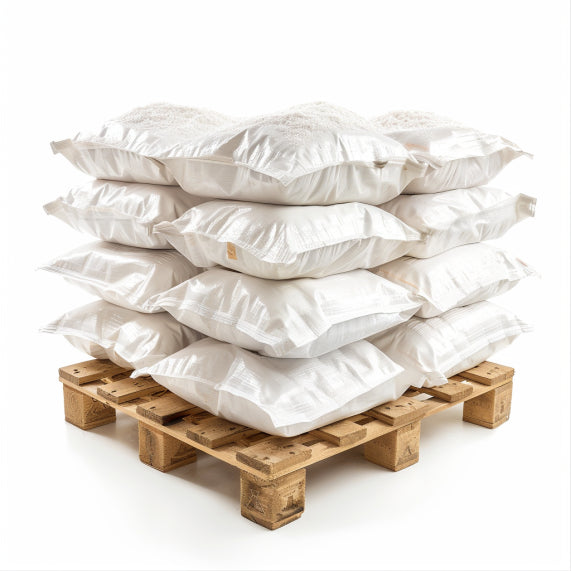
At Halite Salts, we only supply 99.9% pure PDV (Pure Dried Vacuum) salt. This is important because:
- No Sludge: Lower-quality salts often contain impurities that turn into a grey "sludge" at the bottom of your salt tank. This can clog the delicate valves of your softener.
- Even Dissolving: Our salt is vacuum-refined to ensure it dissolves evenly. This prevents "clumping" or "bridging," ensuring every regeneration cycle is 100% effective.
- Softener Longevity: By using pure salt, you protect the internal resin of your softener, which is the most expensive part to replace.
Never Run Out Again
The easiest way to keep your energy bills low is to ensure your softener is always working. We offer a subscription service that gives you a 5% saving and ensures you never have to worry about checking the salt level at the last minute.
Whether you need Block Salt for a modern, compact softener or Tablet Salt for a larger system, we provide next-day delivery across the UK.

Take Control of Your Bills
Once again, the best way to tackle high energy bills is to look at the efficiency of the appliances you already own. By keeping your water soft, you ensure your boiler, shower, and washing machine are working exactly as the manufacturer intended.
We are so confident in the quality of our salt that we guarantee its purity. If you have any questions about which salt is right for your specific machine, our team is always here to help.
Ready to start saving?
Browse our range of premium salt products today and take the first step toward a more efficient, scale-free home.
Disclaimer: While water softeners are highly effective at preventing limescale, they are not a substitute for professional boiler maintenance. Always have your gas appliances serviced by a Gas Safe registered engineer. If you have specific health concerns regarding sodium intake, please consult a medical professional before installing a water softener for drinking water.
