
If you’ve owned a water softener for any length of time, you’ve likely stood in the supermarket or scrolled through a website, staring at different bags of salt and wondering: Is there actually a difference?
At first glance, it all looks the same. It’s white, it’s crunchy, and it’s meant to make your water soft. But as we often say here at Halite Salts, what you don’t see in your salt is actually far more important than what you do see. There is a "secret" in the industry that separates the budget bags from the premium performers, and it usually comes down to three letters: PDV.
In this guide, we’re going to peel back the curtain on salt purity. We’ll look at why 99.9% purity isn’t just a marketing slogan, but a technical necessity for a healthy home, and how choosing the wrong salt might be costing you hundreds of pounds in hidden maintenance.
What Exactly Is PDV Salt?
To understand why purity matters, we first need to look at how salt is made. Not all salt is born equal. In the world of water treatment, you generally encounter two main types: solar/rock salt and Pure Dried Vacuum (PDV) salt.
PDV salt is the "gold standard." It is produced through a sophisticated vacuum-refining process. Essentially, brine is pumped from deep underground and then heated in a series of vacuum vessels. This process evaporates the water and leaves behind incredibly pure, uniform crystals. Because it’s refined in a controlled environment, it is almost entirely free from the "extras" you find in other types, things like grit, sand, and heavy minerals.
When we talk about our premium salt supplies, we are talking about this refined purity. Our products are guaranteed to be 99.9% pure sodium chloride. You might think that the remaining 0.1% doesn't matter, but in the delicate world of water softener valves, that 0.1% is where the trouble starts.
The 0.1% Factor: Why Purity Prevents "The Sludge"
You might be asking, "Is 99% pure not good enough?" In many areas of life, 99% is an 'A' grade. But for a water softener, a 1% impurity rate means that for every 100kg of salt you put into your machine, you are also adding 1kg of insoluble dirt, sand, and minerals.
As we have discussed with many of our long-term customers, those impurities don't just disappear. They settle at the bottom of your brine tank, forming a thick, grey, muddy substance known as "sludge."

What happens when sludge builds up?
- Clogged Injectors: The tiny nozzles that pull brine into your softener can become blocked with grit.
- Valve Failure: Moving parts within the control head can get "gunked up," leading to leaks or the machine failing to regenerate properly.
- Salt Bridging: Impurities help the salt "mush" together, forming a hard crust across the tank. This means your water stays hard because the brine can't reach the resin, even though the tank looks full of salt.
By using a 99.9% pure PDV salt, you are effectively ensuring that every grain you put in dissolves completely. No grit, no mush, no sludge, just clean, effective brine.
How Purity Protects Your "Resin Heart"
The "heart" of your water softener is the resin bed, thousands of tiny beads that trap calcium and magnesium. To keep working, these beads need to be washed in a clean brine solution.
If your salt contains trace minerals like iron or manganese, these can actually "poison" the resin beads over time. Once the resin is fouled, its capacity to soften water drops significantly. You’ll notice your laundry feels scratchy again, or your glassware starts looking cloudy, even though you’re still using salt.
Using high-purity salt is the simplest way to extend the life of your resin. As a result, your machine runs more efficiently, uses less water during regeneration, and lasts years longer than a system fed on "dirty" salt.
Disclaimer: While high-purity salt significantly reduces the risk of mechanical failure, we always recommend following your manufacturer's specific maintenance schedule. If your system is already experiencing heavy sludge build-up, a professional service may be required before switching to premium salt.
The Sensory Difference: It’s Not Just About the Machine
We talk a lot about the "technical" side, but let’s talk about how it feels in your home. The reason you bought a water softener in the first place wasn't to think about brine tanks, it was for the lifestyle benefits.

When your salt is pure, your softener works at peak efficiency. This means:
- Softer Skin and Hair: Without the trace minerals and hardness breakthrough that comes from poor regeneration, your water stays consistently "silky."
- Brighter Laundry: Your clothes stay softer for longer because there’s no mineral residue trapped in the fibres.
- Sparkling Surfaces: You won't find those annoying "white spots" on your shower screen or taps that are often caused by the impurities found in lower-grade salt.
5 Signs Your Salt Is Too Dirty
Not sure if your current salt is up to scratch? Here are five warning signs that you might be dealing with low-purity salt:
- Grey Water in the Tank: When you look into your salt tank, the water should be clear. If it looks grey, brown, or murky, you have an impurity problem.
- The "Salt Bridge": You notice the salt level isn't going down, but your water feels hard. You might have a hard crust of salt hiding a hollow space beneath it.
- Frequent Cleaning: If you find yourself having to scoop "mud" out of the bottom of your brine tank every year, your salt purity is too low.
- Noisy Regeneration: If your machine sounds like it’s struggling or "gurgling" more than usual, grit might be trapped in the valves.
- Cloudy Glassware: Even with a softener, your glasses are coming out of the dishwasher looking hazy. This is often a sign of "hardness breakthrough" caused by inefficient resin cleaning.
Is It Worth the Extra Cost?
In short: Yes. While you might save a couple of pounds per bag by buying the cheapest salt available, you are essentially "kicking the can down the road."
The cost of a single call-out for a water softener engineer can often be more than a two-year supply of premium tablet salt. When you factor in the extended life of your appliances, the reduced need for cleaning chemicals, and the peace of mind that your machine won't fail when you need it most, premium PDV salt pays for itself.

Making the Switch to Halite Salts
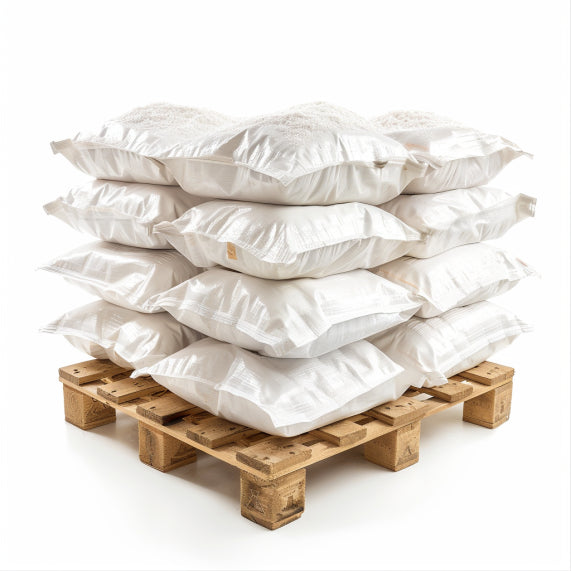
We’ve made it our mission to provide the UK with the purest salt possible. Whether you need convenient 4kg block salt packs or bulk 25kg bags for larger systems, our salt is guaranteed 99.9% pure.
Once again, the difference is in the process. Our vacuum-refined salt dissolves evenly, leaves zero residue, and is completely free from additives. We also offer a subscription service with a 5% saving, so you never have to worry about running out or lugging heavy bags from the shop again. We handle the heavy lifting with next-day delivery across the UK.
If you’re tired of dealing with sludge or worried about the longevity of your water softener, it’s time to stop settling for "good enough" salt. Experience the magic of truly pure water with Halite Salts.
Ready to upgrade your water? Explore our range of PDV-pure salt products here or contact our friendly team if you have any questions about which salt is right for your machine.

