
If you have ever stood in a DIY shop or scrolled through a dozen websites wondering why there are so many different types of salt, you are not alone. Choosing the right salt for your water softener can feel surprisingly complicated. Should you buy the heavy 25kg bags? Are those "bricks" better than the "pebbles"? And does it actually matter which brand you pick?
At Halite Salts, we hear these questions every day. The truth is, while all water softener salt is fundamentally sodium chloride, the form and purity of that salt make a massive difference to how well your machine runs and how long it lasts.
In this guide, we will break down the differences between block, tablet, and granular salt, helping you choose the best option for your specific system and your budget.
Which salt does your machine actually need?
Before we look at prices or brands, there is one golden rule: the machine dictates the salt.
Water softeners are precision-engineered appliances. Some are designed specifically for rectangular blocks, while others have large brine tanks intended for loose tablets. Using the wrong type can lead to "salt bridging" (a hard crust that stops the salt from dissolving) or "mushing," which can clog your valves and lead to an expensive repair bill.
As we have discussed with many of our customers, the easiest way to tell is to look at your brine tank:
- If you see two rectangular holes or a small rectangular well: You almost certainly need block salt.
- If you have a large round or oval tank that you pour loose salt into: You likely need tablet salt.
- If you are still unsure: Always check your manufacturer's manual. Brands like Harvey, Kinetico, and TwinTec are famous for using blocks, while brands like Monarch, BWT, and Tapworks typically use tablets.
Is Block Salt the best choice for convenience?
Block salt has become incredibly popular in the UK, particularly for modern non-electric softeners. These blocks usually come in 4kg units, often sold in packs of two.

The Benefits of Block Salt
- Clean and Easy Handling: No more lugging 25kg bags through the house. The 4kg blocks are easy to carry, store, and drop into the machine without making a mess.
- Consistent Dissolving: Because they are highly compressed, they dissolve at a very predictable rate. This ensures a consistent brine solution for every regeneration cycle.
- Space Saving: Blocks are compact and stack neatly in a cupboard or garage.
The Trade-offs
The main downside to block salt is the cost per kilogram. Because of the extra manufacturing process required to compress the salt into a solid block, you will pay a premium for the convenience. However, many homeowners find that the "hassle-free" nature of blocks is well worth the extra few pounds.
Should you stick with Tablet Salt for value?
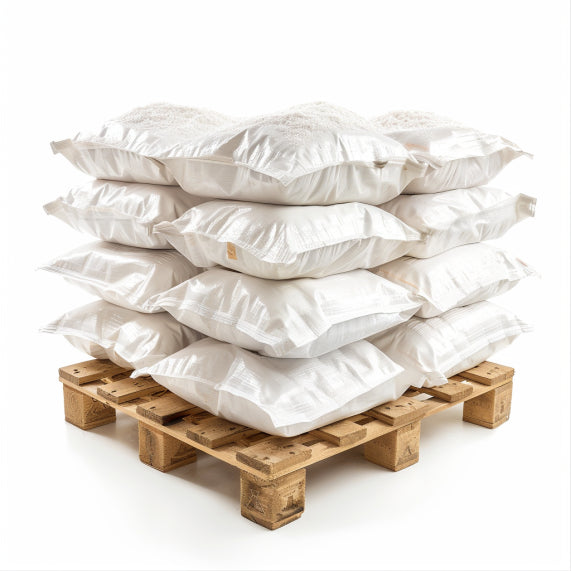
Tablet salt, sometimes called "pellet" or "pillow" salt, is the industry standard for most single-tank electric softeners. These are small, compressed discs of salt that look a bit like oversized mints.

The Benefits of Tablet Salt
- Cost-Effectiveness: Tablet salt is generally the most economical way to run a water softener. If you have a high-demand household, the savings over a year can be significant.
- Universal Compatibility: Most "standard" softeners are built to use tablets. They are widely available and very reliable in larger brine tanks.
- Bulk Buying Options: It is very easy to buy 25kg bags in bulk, which brings the price down even further.
The Trade-offs
The biggest hurdle is the weight. A 25kg bag is heavy and can be difficult to manoeuvre if you have back issues or limited mobility. Furthermore, if you choose a low-quality brand, tablets can sometimes contain "fines" (salt dust) that settle at the bottom of the tank and turn into a thick sludge over time.
Why purity is more important than shape
Regardless of whether you choose blocks or tablets, the purity of the salt is what truly protects your home. At Halite Salts, we specialise in PDV (Pure Dried Vacuum) salt.
Many cheaper salts are "solar salt" or "rock salt" that have been minimally processed. These can contain trace minerals, sand, or even tiny bits of grit. While these impurities might seem harmless, they accumulate in your softener's resin bed and delicate valves.
Our salt is 99.9% pure. Because it is refined through a vacuum process, it is free from the additives and contaminants that cause "clogging" or "sludging."
A quick note: While soft water is wonderful for your skin and your plumbing, it does contain a slightly higher level of sodium than hard water. If you are on a strictly sodium-restricted diet for medical reasons, we recommend consulting with a healthcare professional or installing a separate unsoftened tap for drinking water.
Comparing the costs: Block vs. Tablet
To give you a better idea of the "real world" cost, let's look at a typical UK household of four people in a hard water area (like London or the South East).
| Salt Type | Typical Monthly Usage | Estimated Monthly Cost | Convenience Rating |
|---|---|---|---|
| Block Salt | 4 to 6 blocks (2-3 packs) | £15 - £25 | High |
| Tablet Salt | 20kg to 25kg (1 bag) | £10 - £15 | Medium |
| Granular Salt | 20kg to 25kg (1 bag) | £9 - £14 | Low |
Note: Granular salt is mostly used for older or commercial systems. We generally recommend avoiding it for modern domestic softeners unless your manual specifically asks for it, as it is highly prone to "bridging."
Once again, while tablet salt is cheaper on paper, many of our customers prefer the subscription service for block salt because it removes the need to remember to buy salt or carry heavy bags from the car.
How to spot "Bad Salt" before it ruins your softener
Not all salt is created equal. When you are comparing brands, keep an eye out for these three red flags:
- Greyish Colour: Pure salt should be brilliant white. If the salt looks grey or "dirty," it likely contains high levels of insoluble minerals.
- Excessive Dust: If the bottom of the bag is full of crushed salt powder, it will likely turn to mush in your brine tank.
- Lack of Purity Guarantee: If the packaging doesn't specify "99.9% Pure" or "PDV," you might be buying a lower grade that will require you to clean out your brine tank much more frequently.

Saving money with subscriptions and bulk buys
We know that salt is one of those household essentials that is easy to forget until the water suddenly feels "crispy" again and your soap stops lathering.
In short, the best way to save money and protect your appliance is to plan ahead. By purchasing larger quantities, such as our 10-bag tablet bundles or 9-pack block salt offers, you can reduce the price per unit significantly.
Even better, our subscription service offers a guaranteed 5% saving on every delivery. It’s a "set and forget" solution that ensures your water stays soft year-round without you having to lift a finger (except to put the salt in the machine, of course!).
Final thoughts: Which should you choose?
Choosing the best salt comes down to your machine's requirements and your personal preference for convenience.
- Choose Block Salt if: You have a twin-tank non-electric softener (like a Harvey or Kinetico) and you value ease of use and clean storage.
- Choose Tablet Salt if: You have a standard electric softener and you want the best possible value for money.
- Choose Halite Salts if: You want the peace of mind that comes with 99.9% purity, next-day delivery, and a product that is guaranteed to keep your softener running at peak performance.
If you are still unsure which product is right for your specific model, please don't hesitate to reach out. Our team is always happy to help you find the perfect match for your home. You can browse our full range at halitesalts.co.uk and enjoy the feeling of pure, soft water today.
